Planning a Tent Wedding in McCall? Start With Size.
One of the most common questions couples ask is:
“What size tent do we actually need?”
In mountain towns like McCall, tents often become the centerpiece of the entire event. Providing structure, weather protection, lighting support, and atmosphere all in one. Choosing the right size ensures your wedding feels comfortable, functional, and beautifully designed, not crowded or empty.
This guide breaks it down simply.
Step 1: Start With Guest Count
Tent sizing always begins with how many guests you plan to host. Here is a general rule of thumb:
Guest Count Tent Size (seated dinner)
50 guests 30x30
75 guests 30x30
100 guests 30x40
125 guests 30x50
150 guests 30x60
175 guests 30x70
200 guests 30x80
200+ guests 30x90
These estimated assume round tables with comfortable spacing.
Step 2: Decide What Goes Under the Tent
Guest seating is only part of the equation. Many couples forget to account for activity spaces.
Ask yourself:
Will dinner be under the tent?
Is the dance floor inside?
Are you adding a bar area?
Will the DJ or band be covered?
Do you want lounge seating?
How will food be served? Buffet or plated?
Each addition increases the required footprint.
Step 3: Consider McCall’s Mountain Weather
Local experience matters here. Even summer weddings in McCall can bring:
Sudden wind
Evening temperature drops
Rain showers
Strong sun exposure earlier in the day
Many couples intentionally choose a slightly large tent to allow for:
Heater placement
Sidewalls
Comfortable airflow
Guest movement without crowding
Step 4: Tent Layout matters More Than Square Footage
Two tents of the same size can feel completely different depending on layout. Professional planning considers:
Entrance flow
View orientation (Payette Lake sunsets matter!)
Bar placement
Dance floor visibility
Catering access
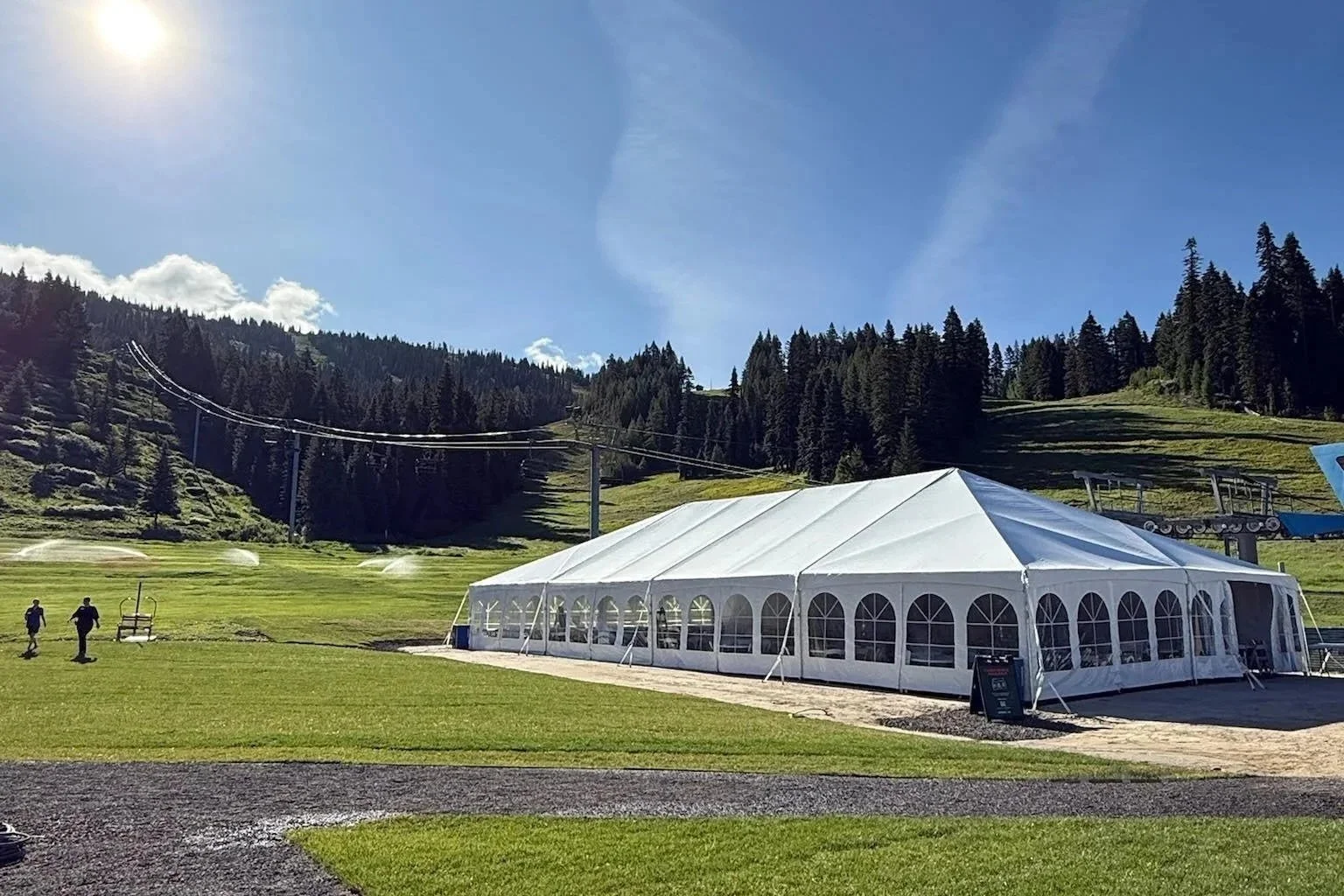
A well-designed layout makes a tent feel natural within the mountain setting rather than temporary.
Step 5: Frame Tent vs Pole Tent (why it affects size)
Most McCall weddings benefit from frame tents because they:
Have no center poles obstructing views or flow
Allow flexible layouts
Works well on grass, gravel, or patios
Supporting lighting and draping installations
This flexibility often means couples can maximize usable space inside the same footprint. At McCall Event Co. we exclusively offer frame tent rentals.
Step 6: Common Tent Planning Mistakes
❌ Choosing Too Small - Crowded tents limit movement and reduce guest comfort.
❌ Forgetting Vendor Space - Caterers and DJs need room to operate efficiently.
❌ Not Planning for Weather Backup - Adding walls later can change spacing needs.
❌ Ignoring Lighting Layout - Lighting transforms evening atmosphere and needs structure planning early.
Why Local Tent Planning Makes a Difference
Mountain venues vary widely, from lakefront lawns to private ranch properties and forest settings. Working with a local McCall rental team helps account for:
Ground conditions
Delivery logistics
Wind exposure
Sunset direction
Venue-specific layouts
These small details make a big difference on event day.
Need Help Choosing the Right Tent Size?
Every wedding layout is unique. We’re happy to help you visualize spacing, guest flow, and design options based on your venue and guest count.